
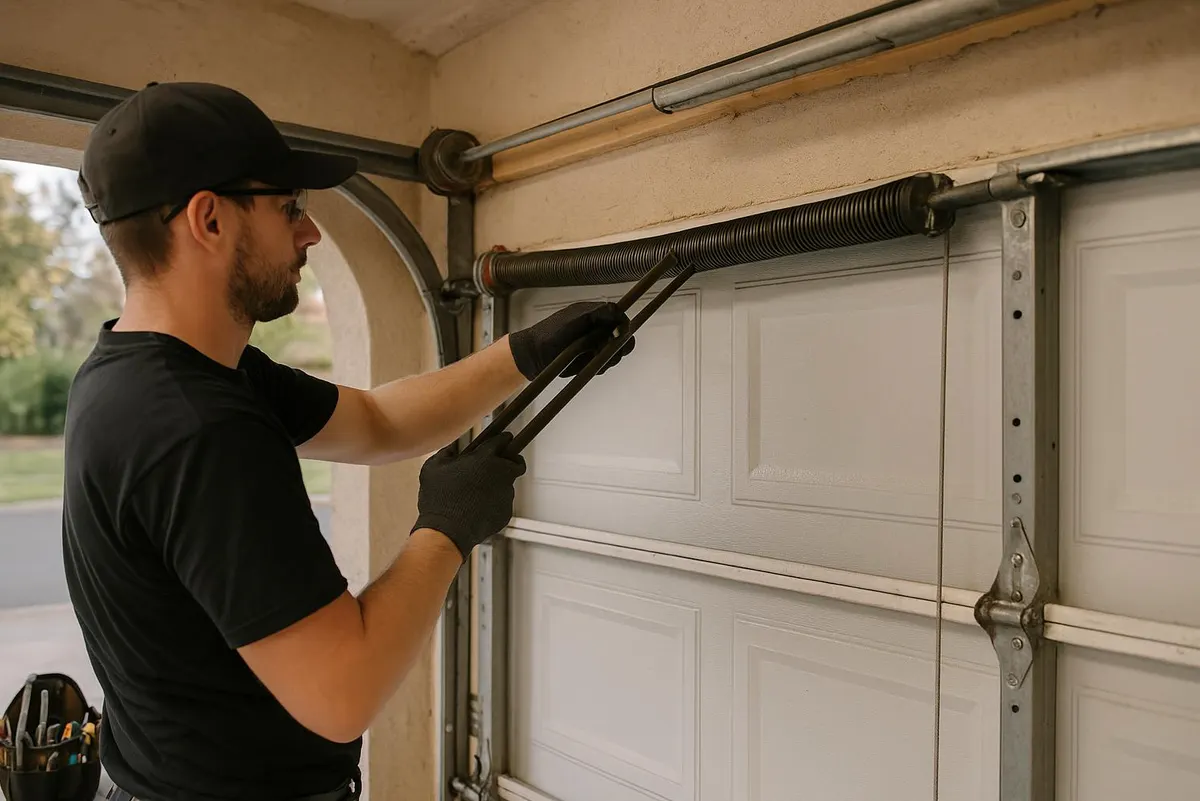
The One-Sentence Rule, and Where It Breaks Down
If your garage door struggles at the same point every single time it opens or closes, the track is bent or misaligned; if the trouble is random or changes location, look elsewhere first. That rule holds most of the time, but there are exceptions worth knowing before you start adjusting anything. Cold snaps can make a door bind consistently near the bottom simply because grease has stiffened or a cheap roller has gone slightly out of round — that's not a track problem, and bending brackets to fix it will make things worse. Likewise, an opener with the travel limits or force setting off can produce a consistent hesitation that mimics a track issue. Track problems are mechanical and visible once you know where to look; the fixes below assume you've ruled out frozen hardware and opener settings first.
Symptoms That Point to a Track Problem
- The door rubs, scrapes, or squeals against the track in one specific spot, every cycle
- A roller visibly pops partway out of the track and has to be nudged back in
- There's a gap between the door panel and the track that widens as the door moves
- The door runs noticeably crooked, with one side higher than the other mid-travel
- You can see a kink, dent, or wave in the metal track itself
- The door reverses or stops partway for no clear electronic reason
Any one of these on its own is worth a look. More than one together usually means the misalignment has been building for a while.
What a Technician Checks, in Order
1. Visual Impact Damage to the Track
This is the first thing any technician checks because it's the most common cause and the easiest to confirm. A car bumper tap, a snow blower clipping the track edge during a storm, or a ladder leaned against the rail can all leave a visible dent or bow. Impact damage almost always shows up as a sharp, localized bend rather than a gradual curve. The fix depends on severity: minor bends can sometimes be carefully worked back into shape with locking pliers and a level to check the result, but any track with a sharp crease or metal fatigue should be replaced outright. Tracks are sold in sections, so often only the damaged piece needs swapping, not the whole rail.
2. Loose or Shifted Mounting Brackets and Fasteners
Next, the tech checks every bracket where the track bolts to the framing. Vibration from years of use loosens lag bolts over time, and in older homes with original wood framing, repeated freeze-thaw cycles can cause the wood itself to shrink slightly, leaving fasteners with less bite than they used to have. A track that's structurally fine but loosely mounted will drift out of alignment under the door's own weight. The fix here is straightforward: re-tightening hardware, moving to a slightly different anchor point if the original wood has degraded, and sometimes adding a support brace if the framing is marginal.
3. Track Out of Plumb or Level
With a level, the technician checks whether the vertical tracks are truly plumb and whether the horizontal tracks slope correctly toward the back of the garage. Small amounts of foundation settling — common enough in older housing stock across the area — can shift one side of the opening just enough to throw the tracks out of parallel with each other. This isn't something you eyeball; even a quarter-inch of drift at the bottom can translate into real binding by the time the door is fully open. The fix is a careful re-leveling and re-anchoring of the track, checked against both a level and the door's own travel.
4. Worn or Incorrect Rollers
Rollers take the brunt of daily wear, and a bad roller can look exactly like a track problem because it causes the same scraping and hesitation. The tech checks for flat spots, cracked nylon, or rust-seized steel rollers, particularly on doors that see a lot of salt spray tracked in on car tires during winter. Worn rollers are replaced in full sets rather than one at a time, since mismatched wear leads to uneven movement again within a season.
5. Damaged Door Panel Pulling the Track
If the track itself checks out fine but the door still binds, the panel attached to that section of track gets inspected. A warped or dented panel — common on original doors that have taken a hit or absorbed years of humid summers and freeze-thaw stress — can physically pull the roller bracket out of alignment even when the track is straight. In this case, the fix isn't the track at all; it's panel repair or replacement.
6. Ice and Debris Buildup in the Track
Finally, especially relevant heading into a Rhode Island winter: packed snow, ice, and road salt residue in the track groove can mimic a bend by physically blocking roller travel. This is checked and ruled out early in practice, but it's listed last here because it's the easiest fix of the bunch — a thorough cleaning and, if needed, a track-safe lubricant rated for cold weather.
When to Call Cranston Garage Door
If your door is binding, scraping, or visibly crooked, it's worth having it looked at before the problem forces the opener to work harder than it should, which tends to shorten its life fast. Our Garage Door Repair service covers exactly this kind of diagnosis — checking the track, brackets, rollers, and panel in the order above rather than guessing. If the door has come off the track entirely or won't close and you're worried about security overnight, our Emergency Garage Door Service is built for that situation specifically.
If you're in Cranston, Warwick, Providence, or anywhere nearby and your garage door isn't running smoothly, give Cranston Garage Door a call. We'll find the actual cause and fix it right, not just the symptom.